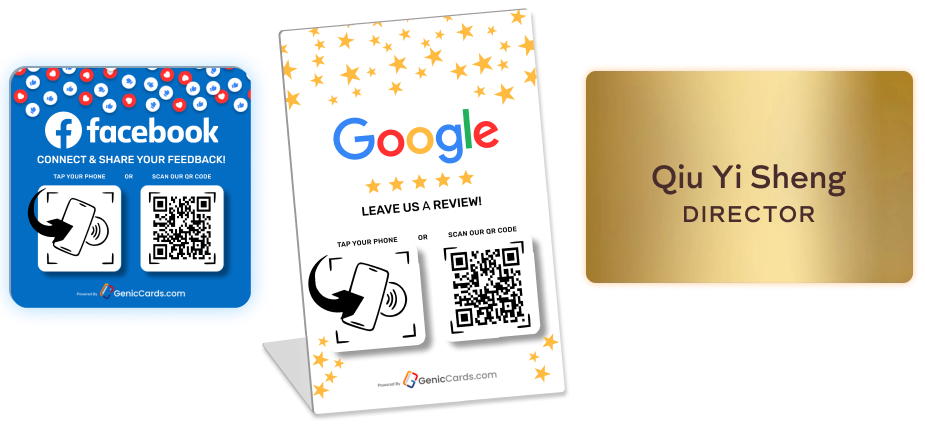
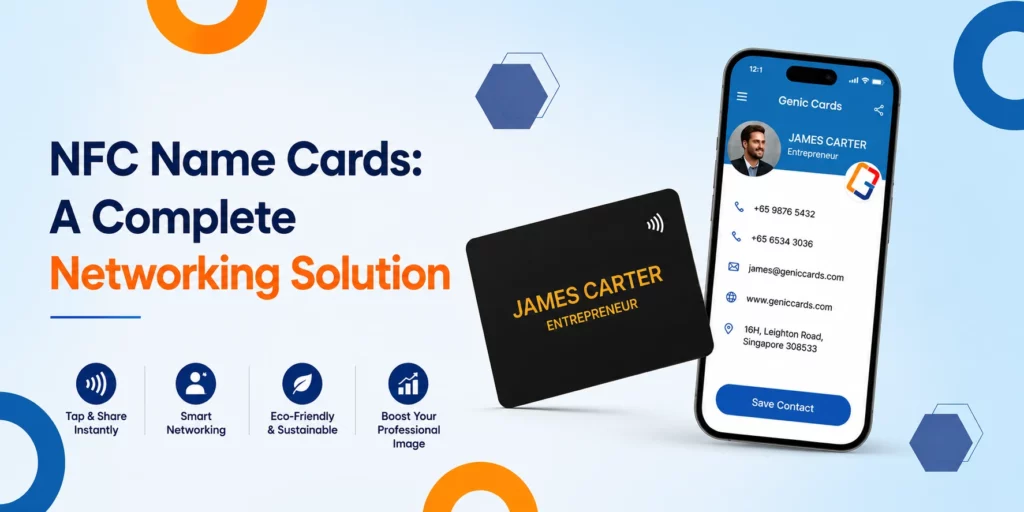


Networking has changed. Nowadays, people no longer rely on paper cards alone to share contact details. Many professionals use an NFC name card to connect faster and leave a stronger impression.
A simple tap can share your phone number, email address, website, portfolio, or social media links in seconds. There is no need to type details by hand or carry stacks of printed cards.
An NFC card combines modern technology with convenience. It helps professionals network more smartly and cleanly. Whether you are a business owner, freelancer, consultant, or sales professional, these cards can improve how you connect with others.
In this guide, you will learn how NFC cards work, their key features, and why they are becoming the preferred choice for networking.
Still handing out paper cards?
Switch to a Genic Cards digital business card — tap or scan to share your details instantly, no app needed.
What Is an NFC Name Card?
An NFC-based name card is a contact-sharing card that uses Near Field Communication technology. The card contains a small chip that sends information to a smartphone when tapped.
The shared information can include:
- Name
- Phone number
- Email address
- Company details
- Website links
- Social media profiles
- Portfolio links
Unlike paper cards, an NFC card can store digital information that you can update anytime.
Many professionals now use these cards as part of their daily networking strategy because they offer speed and flexibility.
Also Read: What Is an NFC Business Card and How It Works
How Do NFC-Based Name Cards Work So Quickly?
NFC name cards use a small chip that transfers contact information wirelessly to a nearby smartphone within seconds.
The card contains a small NFC chip. When the card comes close to a smartphone, the chip sends stored data to the device. The phone then opens a digital profile or contact page.
Most modern smartphones support NFC technology. Users only need to tap the card against the phone to receive the details.
The process takes only a few seconds. Let’s understand its working below:
1. Tap the Card
Hold the card near a compatible smartphone.
2. Open the Link
The phone displays a notification or a web link.
3. Save the Details
The receiver can save the contact information instantly.
This smooth process makes networking faster and easier during meetings, events, and conferences.
Why NFC Name Cards Are Growing in Singapore
The demand for NFC name cards in Singapore has increased in recent years. Businesses and professionals in Singapore often adopt digital tools quickly, especially tools that improve efficiency.
Networking events, trade shows, and business meetings are common in Singapore’s fast-moving business environment. Professionals want solutions that save time and reduce manual work.
An NFC card helps users:
- Share details quickly
- Reduce paper waste
- Update contact information anytime
- Present a modern business image
Many companies also prefer digital solutions that support sustainability goals.
What Are the Biggest NFC Name Card Benefits?
NFC cards improve networking by offering instant sharing, easy updates, better branding, reduced paper waste, and long-term cost savings. There are many NFC name card benefits for professionals and businesses.
Faster Networking
Traditional cards require manual data entry. This often leads to mistakes or lost information.
An NFC card removes this problem. A quick tap transfers details instantly.
This helps people connect without delays.
Easy Information Updates
Printed cards become useless when details change.
With an NFC card, users can update their information online without printing new cards.
This keeps contact details accurate at all times.
Better First Impressions
A smart name card creates a modern and professional image.
People remember interactive experiences more than standard paper exchanges. A digital tap often feels more engaging and memorable.
This can help professionals stand out during networking events.
Reduced Paper Waste
Many businesses now focus on sustainable practices.
A digital card reduces the need for repeated printing. This lowers paper use and waste over time. An electronic solution supports environmentally friendly networking.
Cost Savings Over Time
Although digital cards may cost more at first, they can reduce long-term printing costs. Businesses no longer need to reorder cards after every job title change, phone update, or company rebrand.
How Does a Digital Name Card Compare to Traditional Cards and QR Cards
Digital name cards offer faster sharing, editable information, and a more flexible networking experience compared to paper and QR cards.
| Feature | Traditional Card | NFC Name Card | QR Card |
|---|---|---|---|
| Instant sharing | No | Yes | Yes |
| Editable information | No | Yes | Yes |
| Paper-free | No | Yes | Yes |
| Interactive links | No | Yes | Yes |
| Contact saving | Manual | Instant | Instant |
| Long-term use | Limited | Reusable | Reusable |
| Requires a physical tap | No | Yes | No |
| Works without NFC support | Yes | No | Yes |
| Sharing method | Hand-to-hand | Tap | Scan |
| User experience | Basic | Smooth and fast | Simple and familiar |
A digital name card offers several advantages over traditional paper cards. Paper cards still have value in some industries, but digital solutions continue to grow because of their flexibility and ease of use.
What Features Should You Expect from a Smart Name Card?
A smart name card should support contact sharing, social media links, business information, and multimedia content in one digital profile. A smart card can include much more than basic contact information.
Contact Details
Users can share:
- Phone numbers
- Email addresses
- Office addresses
Social Media Links
Professionals can connect their:
- LinkedIn profiles
- Instagram pages
- Facebook accounts
- Online portfolios
Business Information
Companies can include:
- Product catalogues
- Service pages
- Booking links
- Company websites
Multimedia Content
Some digital profiles support:
- Videos
- Presentations
- Brochures
- Portfolio galleries
This creates a richer networking experience.
Why Are Businesses Switching to NFC Networking Cards?
Businesses use networking cards to improve efficiency, maintain branding consistency, and simplify lead sharing during meetings and events. Many companies now use NFC networking cards for teams and employees.
These cards help maintain consistent branding across the organisation.
Useful for Sales Teams
Sales professionals attend meetings and events regularly. Fast contact sharing helps them connect with potential clients more efficiently.
An NFC card also reduces the risk of losing leads because contact details can be saved immediately.
Helpful at Events and Exhibitions
Trade shows often involve hundreds of interactions in one day.
Using networking cards helps teams exchange details quickly without carrying large numbers of paper cards.
This improves efficiency during busy events.
Stronger Brand Image
Businesses that use digital tools often appear more modern and organised.
A clean and professional networking process can improve brand perception.
How Can Freelancers and Entrepreneurs Benefit from NFC Business Cards?
Freelancers and entrepreneurs use NFC name cards to strengthen personal branding, update details easily, and network more effectively. Freelancers and business owners also gain many advantages from NFC technology.
Easier Personal Branding
A digital profile allows professionals to display:
- Work samples
- Testimonials
- Websites
- Service information
This helps people learn more about the individual immediately.
Better Flexibility
Freelancers often change services, projects, or contact details. Updating a digital profile is much easier than printing new cards every few months.
Improved Networking Opportunities
Quick information sharing helps entrepreneurs connect with more people during networking sessions. The process feels smooth and professional.
Are NFC Smart Cards for Networking Safe and Private?
NFC smart cards give users control over shared information and allow them to manage privacy settings more easily than traditional paper cards. Some people worry about privacy when using digital networking tools.
An NFC smart card for networking usually shares only the information chosen by the user.
Users can control:
- What details appear
- Which links are visible
- When updates happen
Most cards also work through secure digital links.
Compared to paper cards, digital cards may even offer better control because users can edit or remove information anytime.
What Should You Look for When Choosing an Electronic Name Card?
A good electronic card should be compatible with smartphones, easy to use, customisable, and durable. Not every electronic name card offers the same features. Here are a few things to consider before choosing one.
Compatibility
Check whether the card works with both Android and iPhone devices.
Most modern NFC cards support both platforms.
Profile Customisation
A good card should allow users to customise:
- Colours
- Logos
- Photos
- Contact layouts
This helps maintain personal or business branding.
Ease of Use
The sharing process should feel simple.
People should receive contact information without downloading apps or following long steps.
Durability
Many NFC cards come in:
- Plastic
- Metal
- Wood
- Bamboo
The material affects both appearance and durability.
What Does the Future Look Like for NFC Business Cards?
NFC business cards will continue to grow as more professionals adopt digital networking tools for speed, convenience, and sustainability. The use of the NFC card continues to grow across industries.
Businesses now look for networking tools that support:
- Digital communication
- Faster lead sharing
- Better customer engagement
- Sustainable practices
As smartphones become more advanced, NFC technology will likely become even more common.
Many professionals already prefer digital contact sharing because it saves time and improves convenience.
What Are the Common Myths About NFC Cards?
Many people believe NFC cards are difficult to use or limited to tech industries, but they are simple tools suitable for all professionals. Let’s explore some of the common myths around NFC cards below:
“They Are Difficult to Use”
In reality, NFC cards are simple. Most users only need to tap the card against a smartphone.
“They Replace Human Interaction”
An NFC card does not replace conversations. It supports them by making information sharing faster. Good networking still depends on strong communication.
“They Only Work for Tech Companies”
Professionals from many industries use NFC cards today, including:
- Real estate
- Finance
- Healthcare
- Education
- Retail
- Consulting
The technology works for anyone who networks regularly.
How Can You Use NFC Cards More Effectively?
You can use NFC cards more effectively by keeping information updated, using professional images, and sharing relevant links during conversations. To get the best results from an NFC card, keep these tips in mind, as defined below:
Keep Information Updated
Make sure:
- Phone numbers are correct
- Social links work properly
- Websites stay active
Use a Professional Photo
A clear profile image helps people remember you.
Add Relevant Links
Only include links that support your professional goals.
Too many links may confuse people.
Share During Conversations
The best networking happens naturally. Share your card during meaningful discussions instead of rushing through introductions.
Conclusion
Overall, the NFC name card provides users with an innovative tool that lets them build relationships with others. The system brings together fast operations with user-friendly interfaces and adaptable features into one basic product solution.
Users can update their information at any time through digital cards, which differ from traditional paper cards because they enable instant information sharing.
These systems help businesses create better branding elements while they operate their networks through organised systems. Professionals from different fields, including freelancers and big companies, use NFC networking cards to enhance their relationship development process.