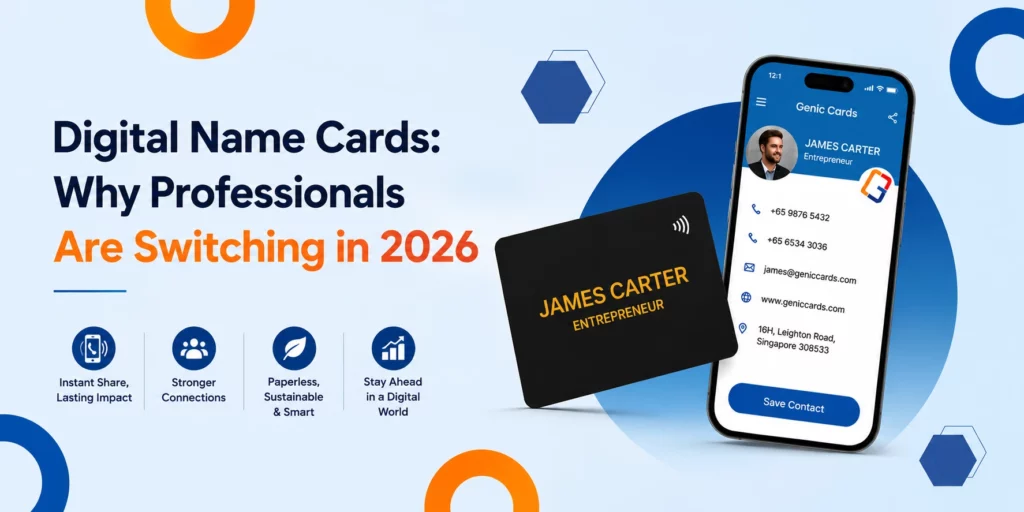


Professionals are switching to digital cards because they offer faster contact sharing, easier updates, better organisation, and smoother networking across online and offline environments.
A few years ago, paper cards were part of every meeting, trade show, and business event. People carried stacks of cards in wallets, pockets, and laptop bags. fast. Nowadays, professionals want faster ways to connect. This is where the digital name card has become popular.
From freelancers to large firms, many people now prefer digital contact sharing over printed cards.
This guide explains why professionals are making the switch, the benefits of digital name cards, and what the future of name cards may look like.
Still handing out paper cards?
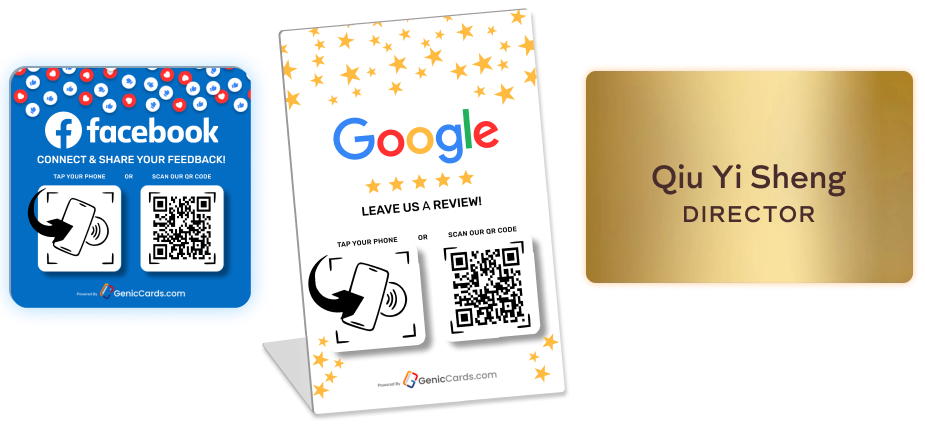
Switch to a Genic Cards digital business card — tap or scan to share your details instantly, no app needed.
What Is a Digital Name Card?
A digital name card is an electronic version of a paper business card that allows professionals to share contact details through smartphones, QR codes, links, or messaging platforms.
Unlike paper cards, digital cards can include:
- Name and job title
- Phone number
- Email address
- Website links
- Social media profiles
- Portfolio links
- Location details
- Appointment links
Some people also call it an e-name, electronic or digital visiting card.
The goal is simple: make professional networking faster and easier.
Why Paper Cards No Longer Fit Modern Work
Paper cards no longer fit modern work because they get lost easily, become outdated quickly, and do not support fast digital communication.
Paper Cards Get Lost
Most people have received a paper card and forgotten about it later. Cards often end up:
- inside bags
- in desk drawers
- in pockets
- thrown away after the events
This creates lost opportunities. A good connection may disappear because the card was misplaced.
Information Changes Quickly
People often change their contact details. With printed cards, every update means another print order, where old cards become useless.
A smart name card solves this problem because details can be updated instantly.
Modern Networking Is Faster
People now expect quick interactions. During meetings or events, few people want to type details manually into their phones.
Digital sharing removes that friction where one scan or tap can save all details in seconds.
What are the Benefits of a Digital Name Card?
The main benefits of digital cards include instant sharing, easy updates, better organisation, eco-friendly networking, and improved professional communication.
Easier Contact Sharing
One of the biggest digital name card benefits is speed. With this card, you can share details during:
- meetings
- conferences
- video calls
- networking events
- sales presentations
This creates smoother conversations, and people spend less time exchanging information and more time building real connections.
Better First Impressions
A clean digital profile often feels more modern than a printed card. Professionals want to show that they understand current work trends. A digital format also allows richer information than a small paper card. An electronic name card can include:
- work samples
- social links
- websites
- booking pages
- presentation files
This gives people a clearer picture of who you are and what you do.
Instant Updates
This is one of the strongest benefits of digital name cards. When your role or contact details change, updates happen immediately.
There is no need to:
- reprint cards
- waste old stock
- carry outdated information
This is especially useful for:
- consultants
- freelancers
- sales teams
- growing businesses
Better Organisation
Paper cards create clutter. Meanwhile, a digital visiting card keeps contacts stored in one place. This helps professionals stay organised and follow up faster.
Searching for contacts also becomes easier. Instead of sorting through paper stacks, people can search by:
- name
- company
- role
- industry
Eco-Friendly Networking
Sustainability matters more in 2026 than ever before.
Millions of paper cards are printed every year, and many are discarded within days. This is why many businesses now prefer eco-friendly digital name cards.
Digital sharing reduces:
- paper waste
- printing costs
- shipping needs
- ink usage
For companies with large teams, the environmental impact can be significant.
Also Read: Smart Business Cards: Features, Benefits & Use Cases
Why Switch to Digital Cards?
Professionals switch to digital cards because they support hybrid work, improve follow-ups, and fit naturally into mobile communication habits.
Hybrid Work Has Changed Communication
Many professionals now work across:
- offices
- homes
- shared workspaces
- client locations
Networking also happens online more often. During video meetings, sharing a printed card makes little sense. An e-name card fits modern communication because it works both online and offline.
Mobile Phones Are Central to Business
Phones are now the main communication tool for many professionals. People use them for:
- messaging
- meetings
- calendars
- networking
A digital card fits naturally into that workflow. Instead of carrying paper cards, professionals carry contact details on devices they already use every day.
Follow-Ups Become Easier
Strong networking depends on staying connected. Digital contact sharing saves details instantly, which reduces the risk of losing information after events or meetings.
Many professionals find that digital sharing leads to:
- faster replies
- better engagement
- easier communication
This is one reason why more people ask: Why switch to digital cards?
The answer often comes down to stronger professional connections.
Why Are Different Industries Switching to Digital Electronics Cards?
Different industries are switching to digital cards because they improve networking, speed up communication, and support modern client interactions.
Sales and Marketing
Sales teams depend on fast lead capture and quick follow-ups.
A digital visiting card helps sales professionals:
- share details quickly
- connect during events
- avoid manual data entry
This improves workflow efficiency.
Real Estate
Estate agents often meet clients outside the office.
Digital cards allow them to:
- share property links
- Send contact details, instantly
- provide location information
This creates a smoother client experience.
Creative Professionals
Designers, photographers, writers, and consultants often need to showcase work samples. An electronic name card can include:
- portfolios
- websites
- social pages
- case studies
This gives clients immediate access to examples of work.
Healthcare and Finance
These industries value trust and accuracy. Updated digital contact information helps reduce confusion and improve communication with clients and patients.
Also Read: Reasons to Switch from Paper Cards to Digital Business Cards
What are Common Concerns About Digital Cards
Common concerns about digital cards include internet access, ease of use, and whether people still prefer paper cards.
“Some People Still Prefer Paper”
This is true.
Certain industries and age groups still use printed cards. However, many professionals now combine both methods.
Some carry a few printed cards while mainly using digital sharing.
“What If There Is No Internet?”
Many digital cards can still work through:
- QR codes
- saved profiles
- offline contact sharing
This makes them practical during travel and events.
“Is It Difficult to Use?”
Most people already know how to:
- scan QR codes
- open links
- save contacts
This makes digital networking easy for most users.
Are Digital Name Cards the Future of Professional Networking?
Yes, the Digital cards will focus on contactless networking, richer digital profiles, sustainability, and better integration with everyday work tools.
The future of name cards will focus on:
- speed
- personalisation
- smart networking
- better contact management
Paper cards will not disappear completely. However, digital formats are becoming the standard for modern professionals.
Several trends are shaping this shift.
More Contactless Networking
People now prefer quick and simple interactions. Contactless sharing supports:
- faster meetings
- cleaner communication
- smoother networking
This trend continues to grow across industries.
Richer Professional Profiles
A paper card has limited space. A smart card can include much more information without feeling crowded. Future cards may include:
- video introductions
- live portfolio updates
- appointment booking
- interactive profiles
This will create stronger professional experiences.
Better Integration With Daily Work
Digital networking tools are becoming part of normal business communication. Professionals now expect seamless contact sharing during:
- online meetings
- events
- conferences
- presentations
This makes digital cards more useful than static paper cards.
Sustainability Will Continue to Matter
Environmental concerns are influencing business decisions across the world. Many organisations now look for ways to reduce waste. This is one reason eco-friendly digital name cards continue to gain attention.
How to Create an Effective Digital Card
An effective digital card should have a clean design, simple sharing options, accurate details, and a professional appearance.
Keep the Design Clean
Simple layouts work best. Avoid:
- too many colours
- crowded text
- unnecessary links
Clear information improves readability
Include Only Important Details
Focus on:
- your name
- role
- contact details
- website or portfolio
- professional social links
Too much information can overwhelm people.
Use a Professional Photo
A good profile image helps people remember you after meetings or events. This adds a personal touch to digital networking.
Make Sharing Simple
The best electronic name card is easy to open, scan, and save. Complicated steps reduce engagement.
Why Digital Networking Is Becoming the New Standard
Professional communication continues to evolve. People want networking tools that are:
- fast,
- flexible,
- easy to update
- simple to share
This is why more professionals now use a digital card instead of printed cards.
The change is not only about convenience. It also reflects how modern business relationships work. Networking now happens across:
- online meetings
- remote teams
- social platforms
- global events
Digital contact sharing supports all these environments.
Final Thoughts
Overall, the move from paper cards to digital networking is growing across every industry. Professionals want better ways to connect, follow up, and manage relationships. A smart visiting card supports those needs in a practical and modern way. As work habits continue to change, the future of name cards will likely become even more digital.
For professionals in 2026, switching is no longer just a trend. It is becoming part of everyday business communication.