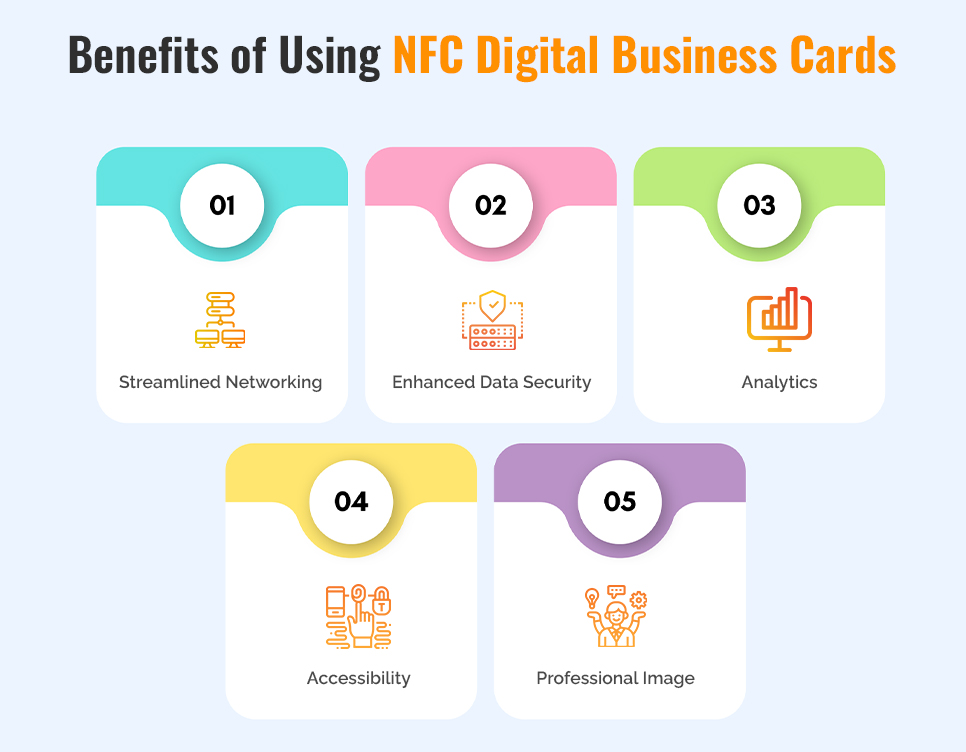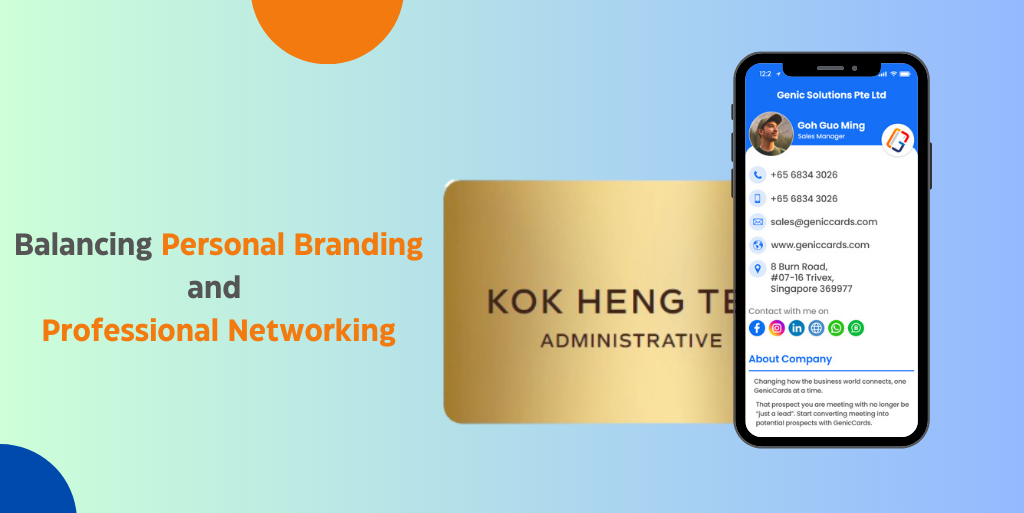
🌳 Your first step towards Sustainability | The Smart Business Card. 🌳

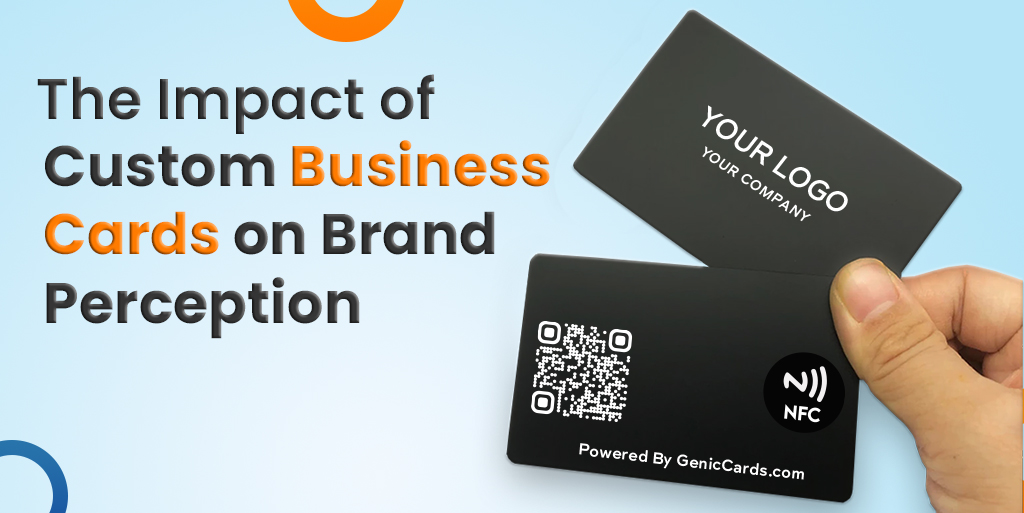
The Impact of Custom Business Cards on Brand Perception

Nowadays, first impressions matter more than ever. One of the most powerful tools to leave a lasting impact is a well-designed customisable business card. These small, physical reminders play a critical role in shaping how potential clients, customers, and even business partners view your brand. By creating a customisable business card that reflects your brand’s personality and professionalism, you strengthen your overall brand perception. But why is brand perception so important? And how can something as simple as a business card influence it? Let’s explore.

What Is Brand Image?

Before diving into the details of custom printed business cards, it’s essential to understand what brand image truly is. Brand image is the perception that a customer or the public has about your company. It’s the overall impression people have when they think of your business. A strong brand image is vital because it shapes consumer behavior, fosters customer loyalty, and differentiates you from competitors.

Many factors contribute to building a solid brand image, including visual elements, messaging, and the overall experience people have with your brand. However, your business card plays a unique role as it is often the first tangible representation of your brand that people encounter. The moment you hand someone your business card, you’re sharing more than just contact information; you’re giving them a glimpse into your business’s identity.

Important Things to Have on a Business Card

To ensure that your business card effectively represents your brand image, it must include specific features that convey your company’s values, personality, and professionalism. Here are four essential features that should be present on every business card to enhance your brand image:

Consistency with Brand Colors and Logo

A business card should mirror your brand’s color scheme and prominently feature your logo. Consistency in design elements across all marketing materials, including business cards, reinforces brand recognition and makes your business more memorable. The colors and logo should instantly remind the receiver of your brand when they look at the card.

High-Quality Material

A business card made from high-quality materials signals professionalism and care. The texture and feel of the card make an impression about the quality of your services or products. Using premium paper, smooth finishes, or unique textures gives the perception that your business is reliable, trustworthy, and focused on excellence.

Clear Contact Information

Including up-to-date and precise contact information is fundamental to making it easy for potential clients or partners to reach you. Beyond just the basics like your name, phone number, and email address, consider adding your website and social media handles. This gives the recipient multiple channels through which they can engage with your brand, enhancing their overall impression of your business.

Personal Touch

Incorporating a personal touch, such as a unique design element or a tagline that aligns with your brand’s mission, adds character to your card. It helps differentiate you from competitors and leaves a lasting impression. This feature is especially important when aiming to connect on a more personal level with clients and business associates.

Alongside these features, there are three key goals that every business card should aim to achieve:

Memorability

The primary goal of a business card is to be remembered. A well-designed and customized business card with standout features can make you memorable in the minds of potential clients or partners.

Professionalism

Your card should reflect the professionalism of your brand. A clean, sleek design with organized content will present your company as reliable and competent.

Connection

Finally, a business card should encourage future connections. Whether it’s a follow-up call, a visit to your website, or a meeting at your office, the business card should act as a gateway to further interaction.

Why Should Your Business Card Be Updated?

Like any other marketing tool, customisable business cards should evolve with your brand. There are several reasons why keeping your business card updated is essential.

Firstly, your business changes over time. Whether it’s a new logo, a change in services, or updated contact information, ensuring that your business card accurately reflects these updates is critical. You don’t want to hand out a card with outdated information, as it can confuse and frustrate potential clients, damaging your brand’s credibility.

Secondly, trends in design and branding shift. A business card that may have been modern and stylish a few years ago might now appear outdated. Refreshing the design of your card ensures that your brand stays relevant and resonates with current audiences.

Lastly, updating your business card presents an opportunity to re-engage with previous clients or partners. Sending a newly designed card to past contacts can rekindle interest in your business, keeping your brand fresh in their minds.

How Smart Business Cards Improve Brand Image

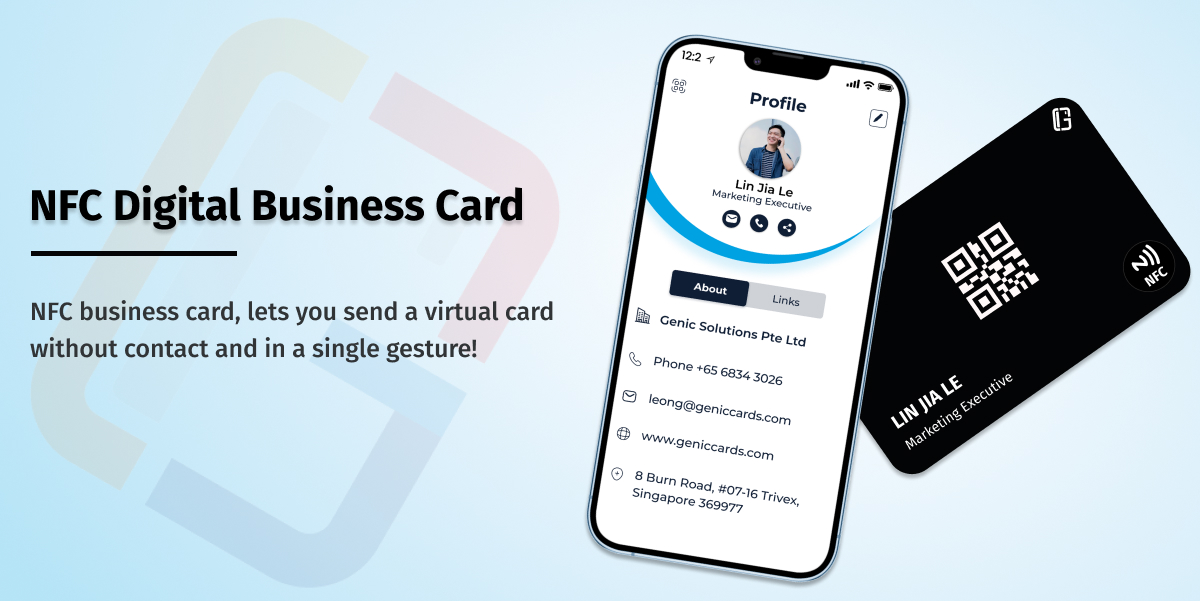
Smart business cards are an innovative twist on the traditional format. Equipped with technology such as NFC (Near Field Communication) or QR codes, smart business cards allow users to share contact information digitally with just a tap or scan. But beyond convenience, how do smart business cards improve brand image?

Demonstrating Innovation

Smart business cards showcase that your business is forward-thinking and embraces new technologies. This can be particularly appealing to tech-savvy clients or partners who value innovation. Being seen as a company that keeps up with trends can significantly improve your brand’s perception in the market.

Convenience and Ease of Use

With a smart business card, recipients no longer need to manually input their contact information into their devices. This seamless exchange enhances their experience with your brand, associating your business with ease and efficiency. Positive interactions, even on this small scale, build a strong and favorable brand image.

Sustainability

As more companies prioritize sustainability, smart business cards also align with eco-conscious values. They reduce the need for printed cards, which in turn cuts down on paper waste. Highlighting your brand’s commitment to sustainability through the use of smart business cards can enhance your image, especially with environmentally-conscious consumers.

Customization and Personalization

Smart business cards offer more customization options than traditional cards. For instance, recipients can be directed to specific landing pages or videos that offer more detailed information about your brand. This level of personalization allows for deeper engagement, strengthening the connection between your brand and its audience.

Incorporating smart business cards into your branding strategy not only improves the user experience but also enhances your brand image by positioning your company as innovative, efficient, and aligned with modern values.

Wrapping it Up

Business cards, though small, carry significant weight in shaping your brand perception. From their design to the materials used, each element of a business card contributes to how your business is perceived by others. By ensuring that your card reflects your brand’s identity, values, and professionalism, you can make a powerful impression on potential clients and business partners. Whether you opt for traditional or smart business cards, keeping them updated and aligned with your evolving brand is crucial.

At Genic Cards, we understand how important your brand image is. That’s why we offer personalized business cards to help your company stand out, make a lasting impact, and stay ahead of the competition.

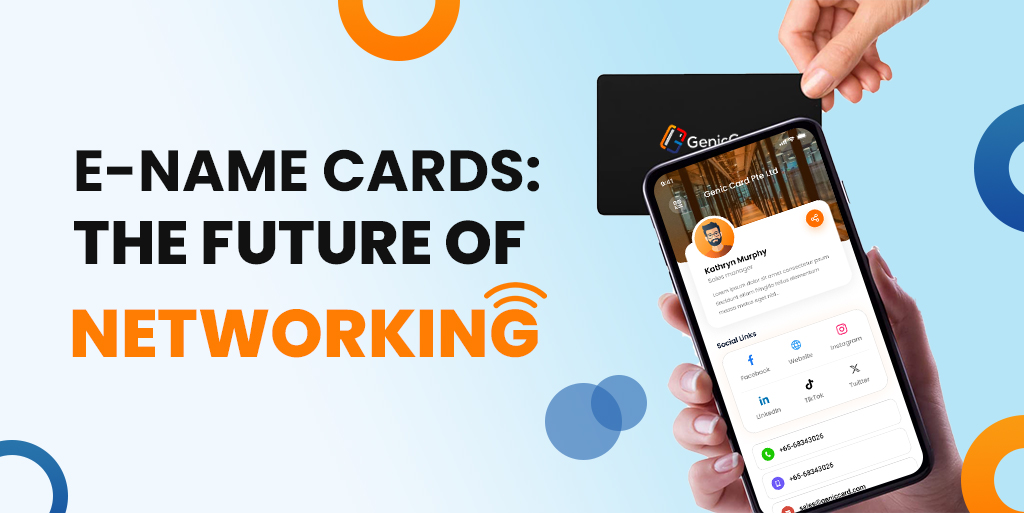
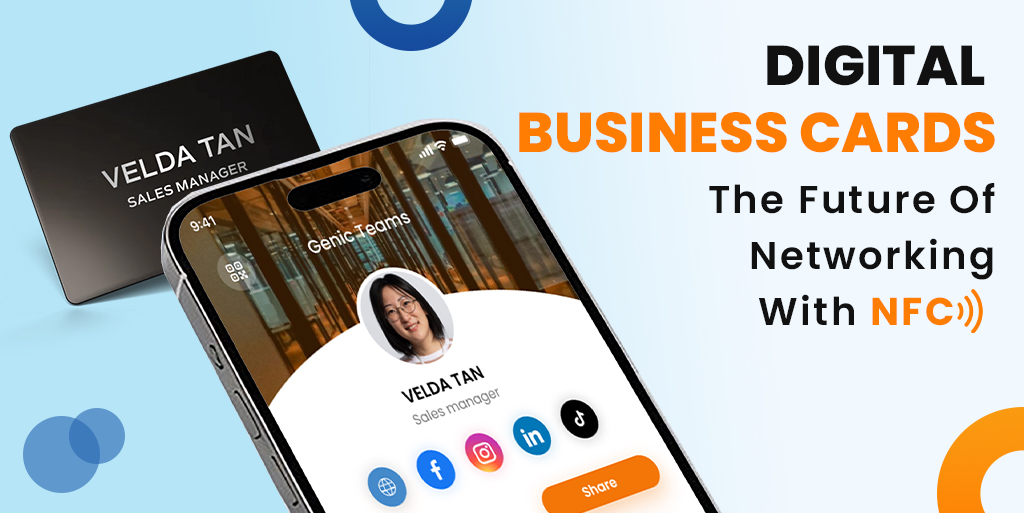
E-Name Cards: The Future of Networking

Networking is essential in business. People have been exchanging contact information for ages, often through printed name cards. However, this practice is changing. Technology has made networking easier and more efficient. The traditional name card is being replaced by the e-name card, also known as an Electronic Name Card.

Nowadays, you need to keep up with the latest trends. E-name cards are part of this digital wave, offering an eco-friendly and convenient alternative to paper cards. So, let’s look at what e-name cards are, why they are becoming increasingly popular, and how they are transforming how we network.

What Are E-Name Cards?

E-name cards are digital versions of the traditional business card. Instead of handing out a printed card, you can send your information digitally. This includes your name, contact details, company name, and any other relevant information. You can share it via email, text, or by scanning a QR code.

An e-name card can also include more than just the basics. It can contain links to your website, social media profiles, or a portfolio of your work. Unlike physical cards, e-name cards are dynamic. You can update them anytime without having to reprint anything. This flexibility makes them a valuable tool for modern networking.

Features of E-Name Cards

E-name cards are not only modern but also packed with features that make them far more versatile than traditional paper cards. Here are some standout features:

1. Interactive Elements

E-name cards can include clickable links to websites, portfolios, or social media accounts. These interactive elements allow recipients to learn more about you or your business instantly.

2. Multimedia Integration

Unlike paper cards, e-name cards can feature multimedia content like videos, audio clips, or animations. This feature adds a personal touch to your networking efforts, making a lasting impression.

3. QR Code Support

E-name cards often come with QR codes that can be scanned with a smartphone. This feature makes it easy to share your information instantly without handing over anything physical. The recipient can simply scan the code and save your details.

4. Custom Branding

Just like traditional business cards, e-name cards can be customized to reflect your brand’s colors, fonts, and style. They offer greater flexibility in design since they are digital, and they can even include animated logos or other branding elements.

5. Real-Time Updates

With e-name cards, you don’t need to reprint cards when your information changes. You can update your card in real time, ensuring that anyone who has your card always has your latest contact details.

6. Analytics

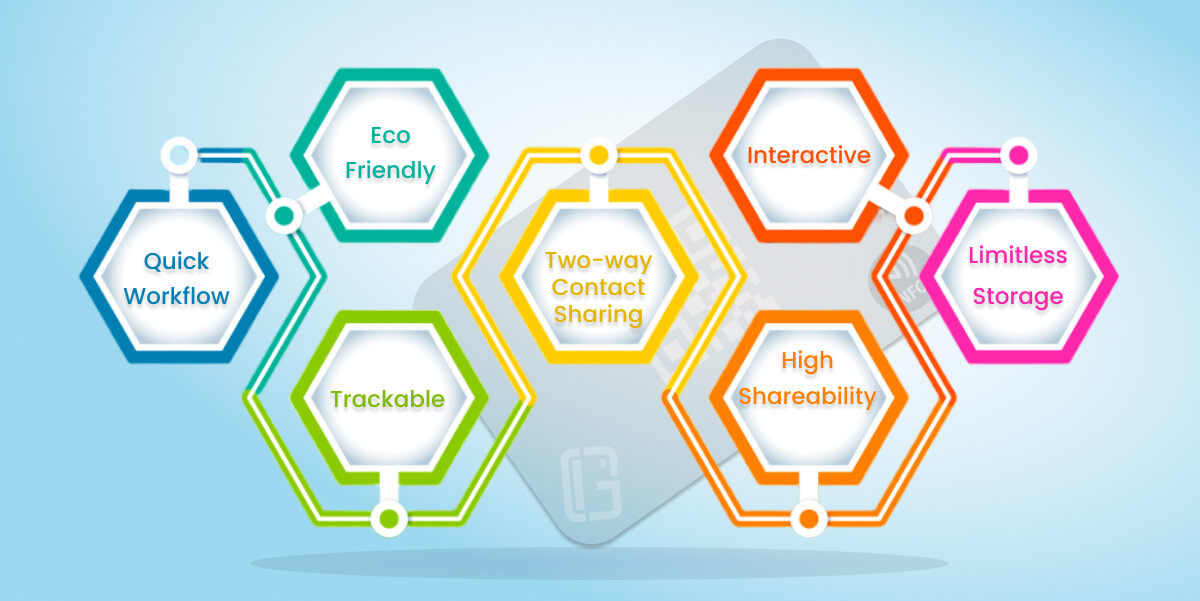
Many e-name card platforms offer built-in analytics. You can track who has viewed your card, how often it has been shared, and which links people are clicking. This feature provides valuable insights into how your card is performing in the networking world.

7. Global Sharing

E-name cards can be shared across the globe with just a few clicks. You can send your card via email, messaging apps, or social media platforms. This feature eliminates geographical barriers, making global networking much easier.

Benefits of E-Name Cards

E-name cards offer several advantages over traditional paper cards. Here are some key benefits:

1. Eco-Friendly

One of the most significant benefits is the environmental impact. E-name cards eliminate the need for paper. You won’t need to print thousands of cards, saving trees and reducing waste. In a world where sustainability is increasingly important, this is a big plus.

2. Cost-Effective

Printed business cards can be expensive, especially if you need high-quality designs or special finishes. With e-name cards, the costs are much lower. You might pay for a digital template or an app, but you won’t need to keep printing more cards. Once you have your e-name card, you can share it endlessly without extra cost.

3. Convenient and Accessible

E-name cards are easy to share. You can send them to anyone with a smartphone, and they don’t require physical space in your wallet or purse. Furthermore, e-name cards are always accessible. You’ll never run out of them or forget them at home, unlike paper cards.

4. Easy to Update

With traditional cards, changing your contact details or job title means printing new ones. E-name cards, however, can be updated in real-time. You can instantly make changes without the hassle of reordering or discarding old cards. This feature keeps your information current at all times.

5. More Engaging

E-name cards allow for more creativity and interaction. They aren’t just static pieces of paper. You can include clickable links, videos, or animations, making them more engaging. This added functionality can help you stand out from the crowd during networking events or meetings.

Why Are E-Name Cards Gaining Popularity?

The rise in the use of smartphones and digital communication tools is driving the popularity of e-name cards. Here’s why they are becoming more common:

Digital Transformation: As businesses shift towards digital operations, using digital tools for networking feels natural. Many professionals prefer to keep their contacts in digital form because it’s easier to manage and organize.

Pandemic Influence: The COVID-19 pandemic forced businesses to find alternatives to in-person interactions. Remote work and virtual meetings became the norm. With less physical interaction, handing out paper business cards became impractical, pushing people to explore digital alternatives like e-name cards.

Technological Advancements: The growth of apps and tools that allow easy creation and sharing of e-name cards has contributed to their rise. It’s easier than ever to design a digital business card that reflects your brand and personality.

How to Create an E-Name Card

Creating an e-name card is simple. Here are the steps to follow:

Choose a Platform: Several platforms offer e-name card services. Look for one that suits your needs and preferences.

Design Your Card: Just like with a traditional card, you need to design your e-name card carefully. Think about your brand. Choose colors, fonts, and layouts that reflect your professional identity. Keep it simple, yet informative.

Add Relevant Information: Make sure your card includes all the necessary details. This typically includes your name, title, company, phone number, and email address. Don’t forget to add links to your website or social media profiles.

Test It: Before you start sharing your e-name card, test it. Make sure the links work, and the design looks good on different devices.

Start Sharing: Once your e-name card is ready, start using it. You can share it via text, email, or QR code. Many apps also allow you to share your card directly through social media platforms.

Are E-Name Cards Replacing Paper Cards?

While e-name cards are growing in popularity, traditional business cards haven’t completely disappeared. Some people still prefer the tactile experience of exchanging a physical card. Moreover, in certain situations, paper cards might still be needed. However, the trend is shifting. More people are adopting e-name cards for their convenience, sustainability, and cost-effectiveness.

It’s also important to note that the rise of e-name cards doesn’t mean the end of all traditional networking methods. Instead, e-name cards are adding another layer to how we connect with others. They are tools that enhance networking efforts rather than replacing them altogether.

The Future of E-Name Cards

The future of networking is undoubtedly digital. As technology advances, so will e-name cards. We’re likely to see even more features integrated into these digital tools. Imagine adding augmented reality elements or integrating them with AI to suggest personalized follow-ups after meeting someone.

Moreover, as more people and businesses become aware of the environmental impact of paper, the shift towards digital solutions like e-name cards will continue. They will likely become the standard for professionals who want to make lasting connections without the waste or expense of traditional cards.

Final Words

E-name cards represent a significant shift in how we network. They are efficient, eco-friendly, and cost-effective, making them an attractive alternative to traditional business cards. As digital technology continues to grow, e-name cards will become even more common, offering new ways to enhance professional connections.

Genic Cards is a leading provider of cutting-edge e-name card solutions designed to simplify and modernize your networking experience. Offering easy-to-use tools and customizable designs, Genic Cards helps professionals and businesses effortlessly transition from traditional paper cards to dynamic, eco-friendly electronic name cards.

If you haven’t yet made the switch, now is a great time to consider it. With e-name cards, you can network smarter, saving time, money, and resources in the process.

Top 5 Problems Solved By Digital Business Cards

As the world moves forward with technology, old practices often change to become more efficient, eco-friendly, and cost-effective. Business cards have been a staple in professional networking for decades. However, as technology advances, traditional paper cards are being replaced by digital business cards.

Did you know that over 88% of paper business cards are thrown away within a week? This not only wastes money but also harms the environment. However, digital business cards offer a modern solution that addresses these issues. They are easy to share, update, and store, making them a more efficient and eco-friendly option.

In this guide, we’ll explore the top five problems solved by digital business cards and why they are becoming an essential tool for today’s professionals. Transitioning to digital cards can revolutionize the way you connect and share information.

Why Choose Digital Business Cards?

Switching from paper to digital business cards brings many benefits. Here are some strong reasons to make the change.

Eco-Friendly Approach

Firstly, business cards digital are much better for the environment. Traditional business cards require paper, ink, and other resources. This means trees are cut down, and lots of waste is created when these cards are thrown away. Digital cards do not need any physical materials, so they help protect the environment.

Also, using digital cards helps reduce our carbon footprint. Companies that choose eco-friendly practices often have a better reputation. They also attract clients who care about the environment.

Cost Efficiency

Digital business cards are also cheaper than traditional ones. Printing paper business cards can be costly. You have to pay for the design, printing, and shipping. Digital cards, on the other hand, are much more affordable. Many platforms offer digital business card services at low prices, and some are even free.

Moreover, with digital cards, you do not have to reprint them when your information changes. You can update your details instantly without spending extra money. This means your contact information is always up to date.

Enhanced Features

In addition to saving money, digital business cards come with features that paper cards cannot offer. These include:

Interactive Elements

Digital cards can have clickable links, social media profiles, and multimedia content. This gives recipients a richer experience.

Easy Sharing

You can share digital cards via email, text, QR codes, or social media. This makes them accessible to a wider audience.

Analytics

Some digital business card platforms offer analytics. This means you can see who views your card and how they interact with it. This data is very useful for networking and follow-ups.

Now that we know the benefits of digital business cards, let’s look at the specific problems they solve.

Problems Solved by Digital Business Cards

Problem solved by Digital Card

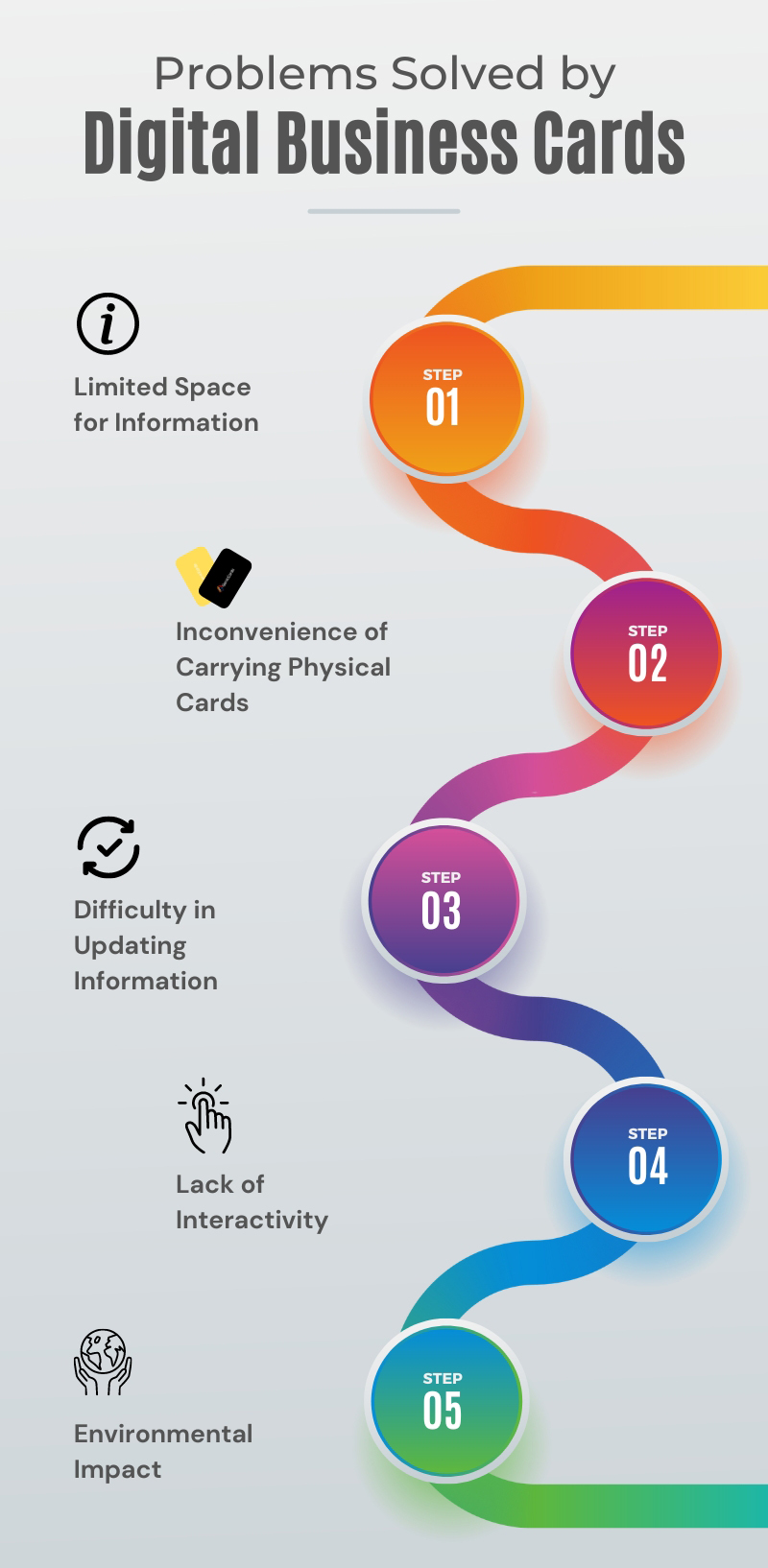
1. Limited Space for Information

Traditional business cards have very little space. This limits how much information you can include. You often have to leave out important details, which can be a problem.

Solution: Digital business cards give you unlimited space for information. You can include all your contact details, social media links, website, and even a portfolio or video introduction. This ensures recipients have all the information they need to connect with you.

2. Inconvenience of Carrying Physical Cards

Carrying a stack of business cards can be a hassle. There’s also a risk of running out of cards at important times. Plus, paper cards can get damaged or lost, making them less effective.

Solution: Digital business cards eliminate the need to carry physical cards. You can store your digital card on your smartphone or other devices. This ensures you always have it with you. Sharing your card is as easy as sending a text or email, making networking more convenient and efficient.

3. Difficulty in Updating Information

When your contact information changes, updating traditional business cards is a pain. Indeed, you have to reprint your cards, which takes time and costs money. Meanwhile, you might be handing out outdated cards, leading to missed opportunities.

Solution: With digital business cards, you can update your information instantly. Whether you change your phone number, email address, or job title, you can edit your digital card quickly. This ensures everyone has your latest details. Additionally, this flexibility helps keep your network informed and maintains professional relationships.

4. Lack of Interactivity

Traditional business cards are static. They offer no interaction beyond the printed information. This limits their effectiveness in engaging recipients and encouraging further action.

Solution: Digital business cards can include interactive elements, such as clickable links, videos, and social media buttons. These features make it easy for recipients to engage with your content, visit your website, or connect on social media. The interactive nature of digital cards enhances their impact and can lead to more meaningful connections.

5. Environmental Impact

The production and disposal of paper business cards harm the environment. Deforestation, water usage, and waste generation are significant concerns with traditional cards.

Solution: Digital electronic business cards offer an eco-friendly alternative. By eliminating the need for paper and reducing waste, digital cards support sustainability efforts. Choosing digital cards shows a commitment to protecting the environment. This can enhance your reputation and appeal to clients who care about the planet.

Final Words

Digital business cards solve many problems that traditional paper cards have. They offer unlimited space for information, convenience, easy updates, interactivity, and eco-friendliness. As professionals look for more efficient and sustainable solutions, digital business cards stand out as a valuable tool for networking and maintaining professional connections.

Switching to digital business cards is a smart move for any professional. They help you stay ahead in today’s fast-paced, environmentally conscious world. Consider making the transition today and see the benefits for yourself. Digital business cards are not just a trend; they are the future of professional networking.

Making the switch to digital business cards can enhance your networking experience. It also supports a greener planet. Digital cards are easy to share, update, and engage with, making them an excellent choice for modern professionals. So, take the step towards a smarter, more sustainable way of sharing your professional identity. Your network and the environment will thank you.

In the end, adopting digital business cards shows you are forward-thinking and considerate of the planet. This can open doors to new opportunities and stronger professional relationships. Embrace the change and enjoy the numerous advantages that come with digital business cards.

Why Are Companies Switching to Digital Business Cards?

Traditional business cards have been around for many years, however, their digital counterparts are gradually but steadily taking their place in the business sphere. There is a trend witnessed in the current business world, where many business entities are shifting towards digital business cards. This development is the consequence of various strong reasons that benefit businesses while also reducing their effect on the environment.

Cost and Environmental Benefits of Digital Business Cards

The foremost reason behind such a changeover is the lower cost. Traditional business cards involve physical printing, which is always costly, especially for firms running large companies. Digital cards do away with these costs altogether. It is not necessary to place an order for new cards when there are new employees in the organization or they change departments. This translates to significant cost savings in the long run.

Some of the benefits of digital cards include, they help in reducing the usage of paper. Paper printed cards may be thrown away after use and this leads to further environmental abuse. This way, the companies can also contribute to the goals of decreasing their carbon emissions and thus being more environmentally friendly. It not only benefits the planet but also builds a good image of the company that is willing to protect the environment.

Enhancing Brand Identity and Consistency Across Channels

Digital business cards have their own benefits, especially in ensuring there is consistency in branding. Every card can be created in such a way as to allow it to portray the company’s brand most appropriately. This involves matters concerning logos, colour and fonts among others. It is very convenient to make sure that every card adheres to the company’s branding guidelines.

It is also easy to update digital cards to reflect new information when needed. It can be beneficial to make changes to branding or employee details with just one click. This makes the contact information to be always correct and current. This level of consistency is hard to achieve with printed cards.

Leveraging Technology for Better Connectivity and Networking

Digital business cards take advantage of current technology to better connectivity. The NFC name card and QR code card offer easy ways of sharing information. They contain a set of data that can be read and sent to a smartphone instantly. This means that by using things like NFC technology, card sharing can be done contactless, which adds another layer of convenience.

Virtual business card apps provide even more versatility. These apps enable card sharing through other common platforms such as email, social sites, and even text message platforms. This means that at any time you can have your business card on you to use whenever you want.

Supercharge Your Branding with Innovative Digital Solutions

Advanced digital tools can be of great help in your branding goals. Traditional business cards are limited to providing only name, phone number, website, and firm’s logo whereas digital business cards are more flexible in that they can include high-quality images and links that can be opened when required. This makes them more engaging than traditional printed cards.

Personalisation is Key

It is significant that in today’s globalised market, consumers should be handled individually. Different sorts of URLs for social profiles and websites and any digital asset can be added to a digital card. This makes the situation more engaging for the recipient as it offers more information to him/her.

Staying Ahead of the Curve

Innovation is also synonymous with being ahead in terms of needs and the abilities and facilities required to attend to those needs. Therefore, if companies embrace the use of digital cards for sharing contacts, it will show society that they are up-to-date about the prevalent digital trends. They can help attract new clients who appreciate up-to-date, innovative thinking.

Better Branding Conveniently

Even though digital cards are cost-efficient and can help save the environment in some ways, that is not all that it entails. It is an essential asset in helping to establish, strengthen, and promote the use of technology and boost branding efforts. Considering this convenience and flexibility, it is not surprising that more organisations are making the change.

Share Your Business Card with Anyone, Anywhere for Seamless Networking

Digital cards can easily share personal information about a person. Needless to say, be it a conference, a meeting, or a casual meeting, you can exchange the digital card immediately. Most companies prefer digital cards over traditional cards due to the flexibility offered.

Multiple Sharing Options Enhance Accessibility

You can share digital business cards using a variety of methods. Examples include QR codes, emails, social media, and text messaging. This adaptability guarantees that you can always provide your contact data, regardless of the scenario.

With so many sharing options available, networking is more effective. They also guarantee that you never miss a chance to connect.

Convenience and Speed in Networking

Conventional business cards can be very inconvenient. You need to always have a pile of cards with you at all times. Digital cards, unlike the traditional ones, can be done through your smartphone alone. Such convenience is a blessing to busy individuals in society today.

Consider you are in a large business event that includes hundreds of other people. This means that instead of trying to search through your wallet or purse to find a business card to exchange you can easily use your phone. This not only saves time but also looks more professional in the long run.

Boosting Professionalism and Modernizing Business Practices

Using digital cards proves your company to be contemporary and sophisticated. It lets clients and partners know that as a company you are willing to adapt to new technologies. This perception can be especially important in industries where people seek to implement innovations.

Reflecting a Forward-Thinking Approach

In today’s business environments, any organization that invests in digital business cards shows that the organization is forward-thinking. This can also attract clients who would prefer new solutions to a problem. It also puts your business in a strategic position in front of rivals who have not yet embraced advanced means.

Enhancing the Professional Image

A well-designed digital name card may enhance your reputation. Your card will stand out if it contains interactive elements, unique links, and beautiful graphics. This may leave a lasting impact on partners and clients.

Streamlining the Process of Information Exchange

Digital cards help to optimise the act of the contact exchange. They cut the time and reduce the chances of making errors in reading and putting data into the correct templates.

Automatic Updates and Management

Replacing the details on a digital card is easy. If you recently changed your phone number or your job title, you do not have to wait until the next time you print a new card. This ensures that your contacts possess the latest information as per your communication.

Ease of Data Collection

Most digital card platforms support automatic synchronization, enabling users to add new contacts to a phone or CRM system instantly. This automation makes it possible to manage and expand the network with less effort.

Enhancing Customer Experience and Engagement

The use of digital cards has shown considerable potential to enhance the overall experience of the customer. They enable clients to find your information easily since they are designed in a specific manner that enables clients to locate information quickly without having to search through documents for long.

Interactive Features for Better Engagement

Digital cards can provide a link to another website, picture, video and many others. These elements help increase the interest of people and impart more information through your card. It would be beneficial if these details improved the overall impression and therefore helped clients build rapport with you.

Simplifying Follow-Up Processes

It is important to ensure that we carry out follow-ups with all the new contacts that we get. Using digital business cards makes this process relatively easier. If the contact information is already inputted in digital form, the sending of follow-up messages such as emails or messages can now be easily done.

Addressing Security and Privacy Concerns

One potential concern with digital business cards is security. Sharing digital information can pose risks. However, most digital business card platforms use encryption and secure sharing methods to protect your data.

Secure Sharing Methods

Platforms often use encrypted links and secure QR codes. This ensures your contact information is shared safely.

Privacy Controls

You can control what information you share and with whom. This gives you peace of mind knowing your data is secure.

Simplifying the Management of Business Cards

Managing a large collection of business cards can be challenging. Digital cards simplify this process.

Organized and Searchable Database

Digital cards can be stored in an organized, searchable database. This makes it easy to find contacts and manage your network.

Integration with CRM Systems

Many digital business card platforms integrate with CRM systems. This streamlines the process of adding new contacts to your database.

Supporting Eco-Friendly Business Practices

Switching to digital cards supports eco-friendly business practices. It reduces paper waste and lowers the carbon footprint of your company.

Reducing Environmental Impact

By eliminating the need for printed cards, you contribute to environmental sustainability. This can also enhance your company’s reputation as an eco-friendly business.

Promoting Sustainability Initiatives

Adopting digital cards can be part of broader sustainability initiatives. It demonstrates your commitment to reducing environmental impact.

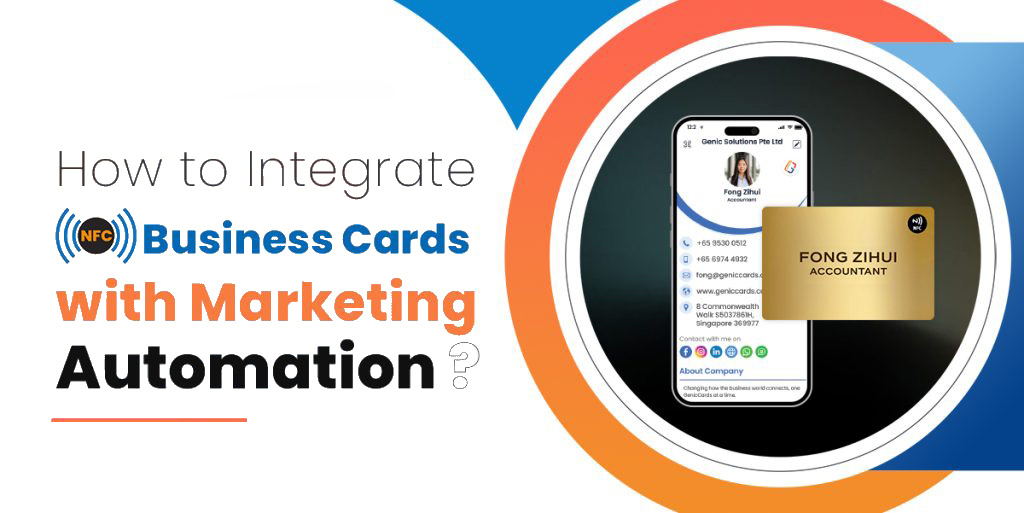
How to Integrate NFC Business Cards with Marketing Automation?

The digital age has brought new tools and technology that have altered old marketing methods, making them more interactive, customized, and effective. Among these improvements, Near Field Communication (NFC) technology is notable for its ability to provide smooth, immediate data exchange with a single tap. NFC business cards in Singapore, a new spin on conventional networking tools, use this technology to transform how professionals communicate contact information and interact with their target audience. Businesses that integrate NFC business cards with marketing automation systems may open up a variety of options to improve client interaction, streamline data collecting, and efficiently provide tailored information.

This integration not only streamlines the process of taking leads and measuring interaction, but it also takes the networking experience to new heights, combining ease with creativity. As we go deeper into the complexities of this integration, it becomes evident that these cards are more than simply a digital handshake; they are a potent marketing toolset to transform the landscape of professional encounters and consumer involvement in the digital age.

What are NFC Cards?

Imagine tapping a business card against a smartphone and instantly sharing contact information, websites, portfolios, and social media profiles. They are smart, eco-friendly, and can carry a wealth of digital information, far beyond what traditional paper cards offer. Here are some benefits:

Strategies for Effective Use

With your NFC name card and marketing automation system in sync, it’s time to put them to work. But how can you use them effectively? One approach is to make your first impression at networking events or meetings unforgettable. Instead of handing out a traditional card that might get lost, an NFC card creates an immediate interaction, making you memorable.

Another strategy is to use them as a tool for seamless follow-ups.

For instance, you could program your NFC card to add contacts directly to a nurture campaign in your marketing automation system. This not only saves time but also ensures that every potential lead is automatically entered into your sales funnel.

You can see how many individuals scanned your card, what information they accessed, and how they used it. This data is invaluable, allowing you to fine-tune your plans and customize future encounters based on actual engagement numbers.

Overview of Marketing Automation.

Marketing automation is like having an additional pair of hands, which helps you manage and nurture your leads automatically. It is about leveraging software to automate marketing tasks including email marketing, social media posting, and ad campaigns.

The Synergy between NFC Business Cards and Marketing Automation

When NFC business cards and marketing automation join forces, the potential for personalized and efficient marketing skyrockets. Here’s how they complement each other:

Preparing for Integration

It’s important to match this technology with your marketing objectives before hopping on the NFC bandwagon. What are your goals, ask yourself? Your goals will direct the integration process, whether they are to improve customer satisfaction, increase leads, or streamline data collecting. Next, selecting a marketing automation platform that supports NFC technology is vital. Not all platforms are created equal, so ensure yours can handle the data NFC interactions provide. Lastly, your these cards must be programmable and compatible with your chosen system. This preparation phase sets the foundation for a successful integration.

Steps to Integrate NFC Business Cards with Marketing Automation Systems

Although it may seem complicated, integrating NFC business cards into your marketing automation system is easy. This is how to begin:

Best Practices for Leveraging NFC Business Cards in Your Marketing Strategy

To make the most out of NFC business cards, it’s crucial to follow some best practices that ensure your efforts yield the best results. Here are some key strategies:

Design Effective Business Cards:

Keep your digital content updated and relevant. Ensure the landing page or content linked to the NFC card is mobile-friendly and engaging.

Data Compliance and Privacy:

Always obtain consent before storing personal information.

Be transparent about how you will use the data collected through NFC interactions.

Measuring Success:

Track the number of taps and interactions

Examine the percentage of interactions that result in the intended activities (such as sign-ups or purchases).

Businesses can develop effective marketing campaigns that respect user privacy and yield useful insights into customer behavior and campaign efficacy by following these guidelines.

Business Card with CRM System Integration

Time savings and fewer errors: manual data entry is outdated. You save time and avoid errors when someone presses your NFC business card because their information is automatically added to your CRM.

Streamlined Follow-Ups: You can guarantee prompt and successful follow-ups with possible leads if you have all of your contact information in one location. Eliminate fumbling for misplaced notes or business cards!

Improved Customer Interactions: You can tailor your communication tactics when every interaction is captured in your CRM. This leads to better customer relationships and stronger connections.

Up-to-date Information:  CRM integration keeps your contact information constantly updated. This ensures your sales and marketing teams have the most recent details for successful outreach.

Enhancing Customer Experience with NFC Business Cards

NFC business cards provide a unique opportunity to make strong first impressions. They may grab the interest of potential clients or partners right away by offering rapid access to interactive material. Furthermore, these cards allow you to strengthen connections by providing a personalized experience.

For example, you may use your NFC business card to access a personalized welcome video, a digital portfolio, or a special offer, making the contact more engaging and memorable.

This degree of personalization and engagement distinguishes you from rivals and develops a stronger connection with your target audience, perhaps converting casual contacts into serious commercial partnerships.

Overall, NFC business cards elevate the customer experience by injecting a dose of innovation and personalization. They’re a powerful tool to make a lasting impression and cultivate deeper connections that can blossom into successful business partnerships.

Integrating Business Cards with CRM Systems

To get the most out of NFC business cards, integrate them with your customer relationship management (CRM) systems. This interface enables automated updates and syncing of customer information, saving time and lowering the chance of mistakes. When someone scans your NFC business card, their contact information and interaction data are automatically sent into your CRM, providing your sales and marketing teams with current information.

This smooth data flow improves the effectiveness of your follow-up procedures, ensuring that potential leads are nurtured quickly and efficiently. Furthermore, it offers a more comprehensive perspective of client interactions, allowing for more tailored and informed communication tactics.

Summary

Integrating NFC business cards with marketing automation systems marks a huge step forward in the way organizations interact with potential clients and partners. This collaboration not only streamlines data collecting and lead creation, but it also creates new opportunities for tailored marketing. Businesses may use these technologies to build more relevant and effective marketing campaigns by adhering to best practices and remaining current on upcoming trends.

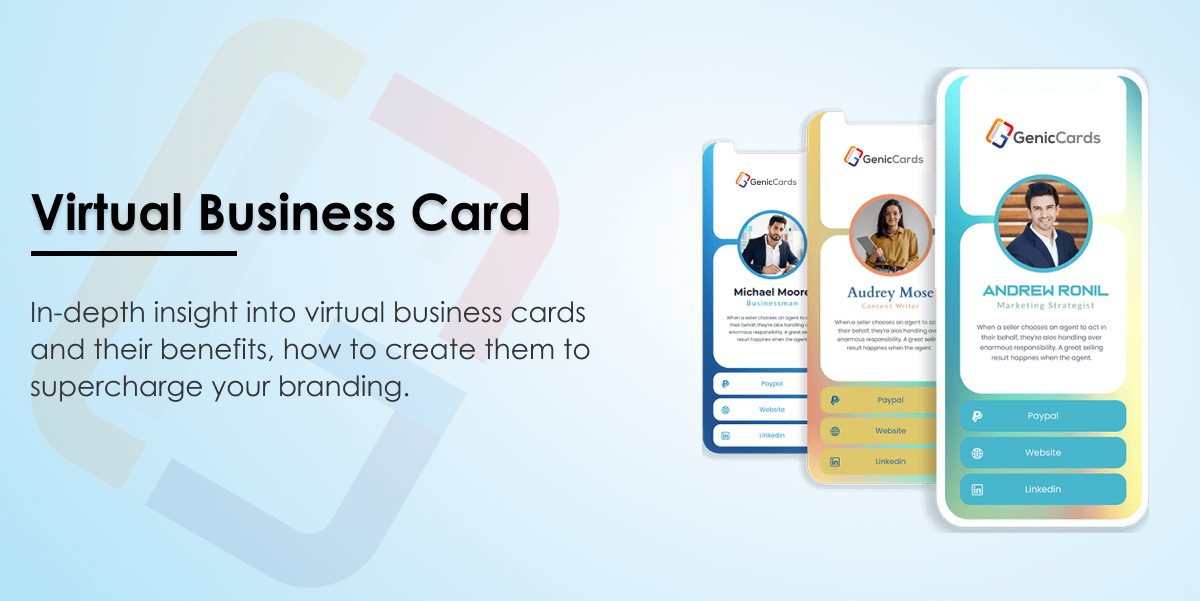
What is Virtual Business Card – Benefits of using Smart Business Card App

People once exchanged paper business cards as a way to network professionally and promote their businesses. However, since the last few years have seen a shift towards digitalisation, people can now easily share their contact details via virtual business card.

In today’s tech-driven world, traditional business cards are usually thrown away because convenience always wins out. Nowadays’ busy professionals would much rather click their way to instant information than spend time shuffling through physical cards that aren’t relevant.

This is where virtual business cards are helpful!

Want to learn more about virtual cards?

In this blog, you will get to know in-depth knowledge about digital business cards!

What is a Virtual Business Card?

Virtual Business Card simplify networking with their increased interactivity and worldwide reach, giving professionals a productive and dynamic tool for information sharing in today’s digitally-driven business environment.

This card is a profile that links all of your digital contact details together. It is also known as a virtual business card, mobile business card, QR code business card, or electronic business card. They enable people to share who they are to everyone, everywhere.

These cards can be made with a e business card app or online. Enabling you to carry electronic business cards on your preferred devices. Your contact information can be shared while you’re on the go using laptops, tablets, smartwatches, and smartphones.

How Do Smart Business Card Work?

Users of smart business cards can create, save, and share their professional information digitally with the help of specialised apps. Typically, these cards have customisable options, interactive features like clickable links, and contact information. Simply sharing digital cards via text, email, or QR codes allows users to exchange them. After that, the recipient has the option to import the data into their contact list or save the card straight to their smartphone.

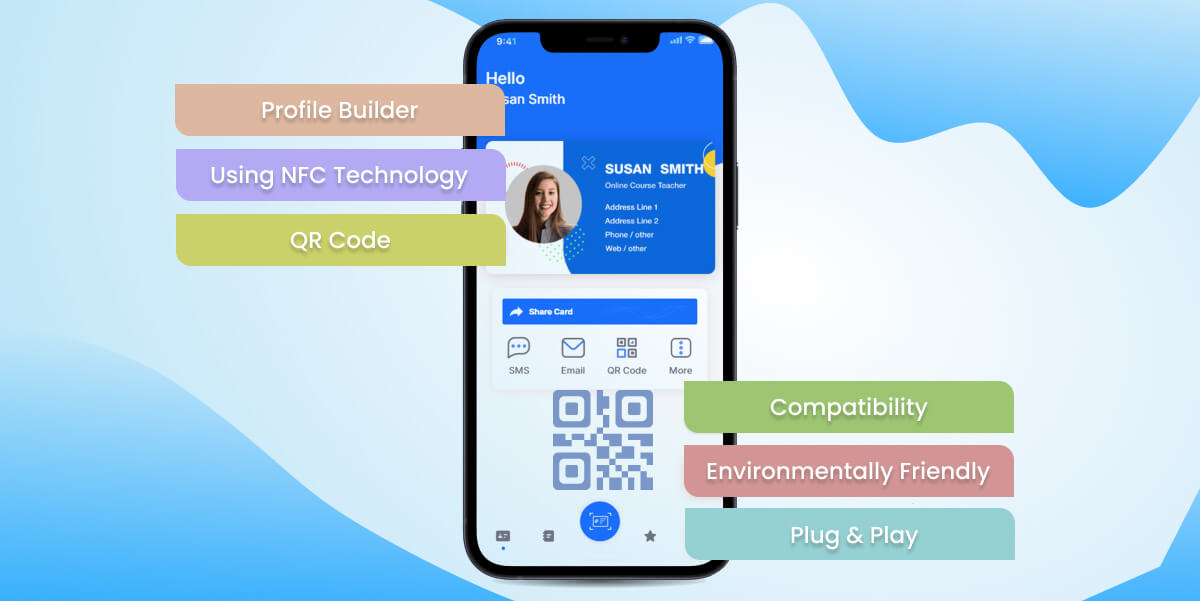
Features of Virtual Business Card

features-of-virtual-business-card

With the help of the profile builder feature, users can easily create an impressive and intelligent business profile. A comprehensive and excellent first impression is made possible by the ability to improve contact information, incorporate social media links, add website links, and even include UPI payment links.

Smart business cards use NFC technology, which enables information sharing with a single tap on NFC chips. With advantages like rapid data transfer and the ability to instantly open the digital card by scanning the embedded NFC chip, this feature guarantees a quick and effective networking experience.

Virtual business card with QR codes allow for easy and interesting client networking. Contact details such as name, phone number, address, email, and website details can be found by scanning the QR code. The seamless sharing of QR codes via emails, social media pages, and WhatsApp guarantees a flawless networking experience, improving communication and information sharing.

NFC smart business cards work effectively on a wide range of smartphones because they are compatible with both the iOS and Android operating systems. This essential feature facilitates quick and safe contactless connections by enabling the efficient sharing of business information with any smartphone.

Compared to traditional paper business cards, smart business cards are more environmentally friendly. These cards can be reused for a lifetime, which helps the environment by removing the need to print name card boxes. They act as a single, all-inclusive source for all important contact details, enabling users to share information anywhere, at any time, and helping to preserve the environment.

Without installing any extra apps, the plug-and-play feature makes it easier to share and receive contact details. Without the need to download any apps, NFC smart business cards provide a hassle-free way to share pertinent business information with a single tap and facilitate wireless information exchange.

Read More – QR Code Digital Business Card

What are the Advantages of Using Virtual Business Card?

Instead of giving your contact a paper business card, send them a digital one. Certain digital cards instantly add you to the recipient’s contact book when shared on a smartphone. You can be certain that your contact will always have your contact information on hand if you do this.

Over time, printing traditional business cards can get expensive, especially for professionals whose information is updated often. Virtual business cards are an affordable way to keep a professional online presence while doing away with the need for printing.

Using traditional business cards presents a perpetual problem when it comes to updating contact information. This issue is resolved by digital business cards, which let users update their information instantly. This will guarantee that the most accurate and up-to-date information is always shared with your contacts.

The move to virtual business cards fits into a broader trend of environmentally responsible and sustainable business practices. Smart Business Cards lessen their environmental impact by doing away with the need for paper, ink, and printing procedures.

How to Create Virtual Business Cards?

Everything is becoming digital in the world we live in. We communicate with people via the internet. We conduct business online. Our company brand is developed online. We never stop using our smartphones. To network and reach a wider audience, why don’t we have a digital business card? Genic Cards is the one to choose if you are looking for effective and smart virtual cards for your business!

There are three simple steps you need to follow to create a virtual business card!

Step 1: Sign Up Genic Cards App

To begin your free trial, download and register on our Genic Card App, which is available on Google Play and the Apple Store!

Step 2: Register for a 14-day Free Trial

Get a 14-day free trial by downloading our app and creating a profile.

Step 3: You are Ready to Use

Your card is ready to use. If you need any help or have any inquiries about digital business card, you can connect with our team.

QR Code Digital Business Card: 5 Smart Networking Tactics

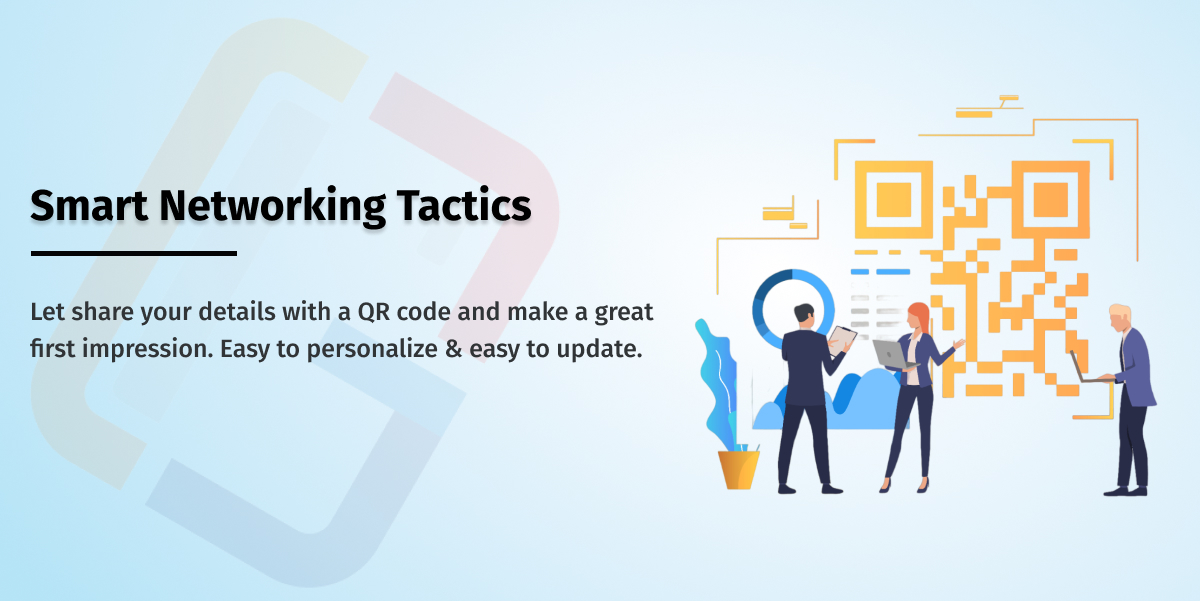
In today’s fast-paced digital landscape, the traditional business card is getting a revolutionary makeover. Enter the QR code digital business card, a seamless way to share contact details with a simple scan. It’s an innovation that resonates with the on-the-go lifestyle of professionals and aligns perfectly with the environmentally conscious mind set that’s becoming increasingly prominent.

The QR code contact card provides a contactless, paper-free way of exchanging information—vital in a post-pandemic society where digital is the new default. The ease of sharing and the cost-efficiency make it a no-brainer. With a few clicks using a reliable QR code generator, anyone can transform their details into a QR code, ready to be scanned and stored.

Advantages of Switching to QR Code Business Cards

The Convenience Factor

Remember carrying stacks of business cards to conferences? Those days are over. Now, your QR code acts as a digital repository for your contact information. It’s simple: save your QR code as an image, then display or send it to new connections. They can instantly scan and save your details to their devices—a capacity far beyond what a paper card can hold.

The ‘Cool’ Factor

A QR code contact card carries a certain novelty even now, fascinating people with their quick access to information. Adopting QR code business cards can set you apart, leaving a memorable impression. It’s not just about sharing your number or email; it’s about offering a digital handshake that’s both innovative and safe.

Cost-Effective Networking

The financial savings are also substantial. Without the need for physical cards, you can allocate funds elsewhere, ensuring your networking is as cost-effective as it is impactful.

Embracing Eco-Friendly Practices

The environmental benefits are clear. By going digital, we significantly reduce paper waste, contributing to a greener planet. Additionally, since everything is digitally documented, you can always access your contacts from wherever.

Let’s go through the top 5 smart networking tactics that can be done with a QR code business card.

Read More – NFC Technology for Business Cards

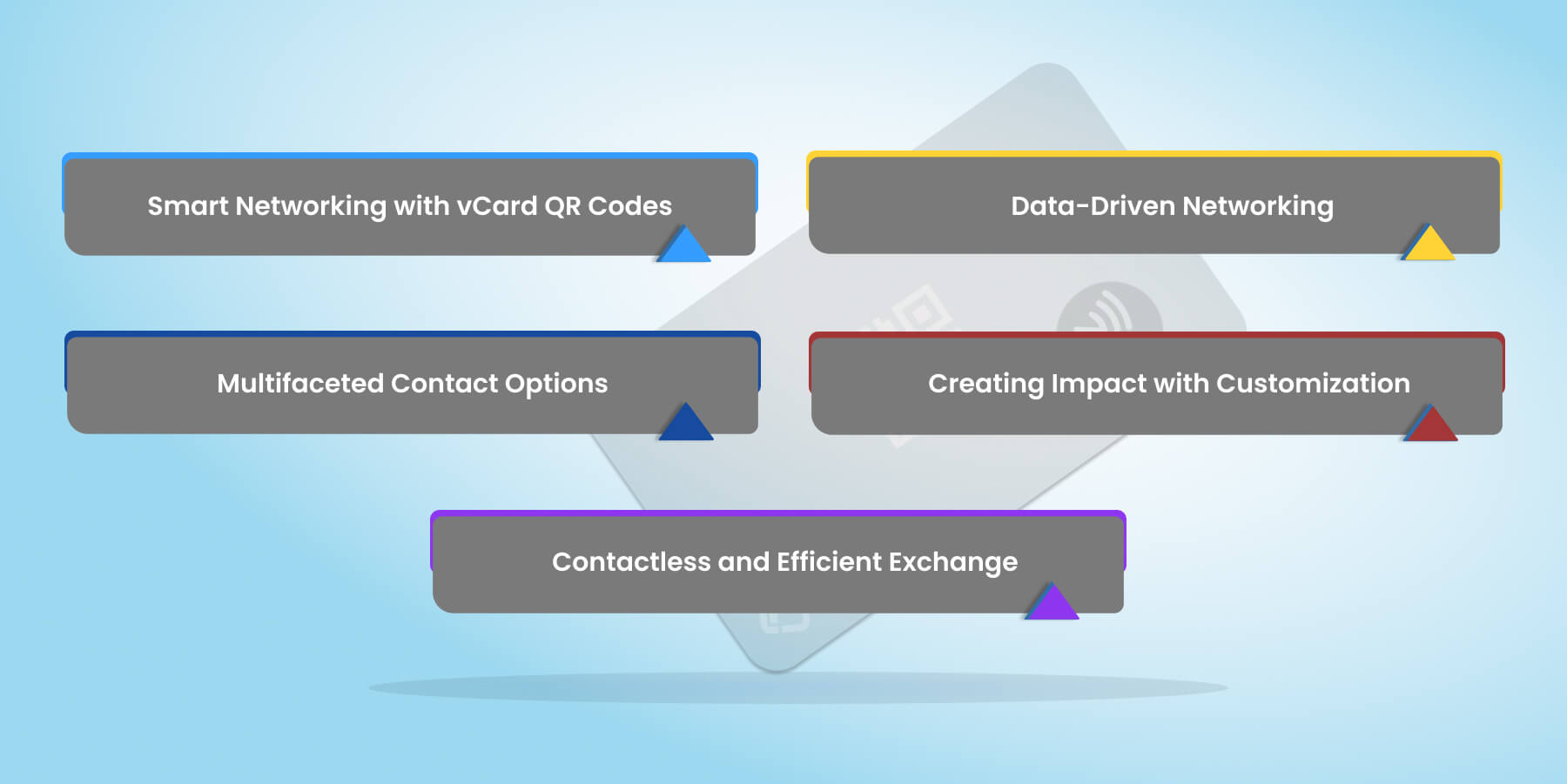
5 Smart Networking Tactics with QR Code Digital Business Card

smart-networking-tactics

Tactic #1: Smart Networking with vCard QR Codes

A vCard QR code business card isn’t just a digital version of your business card; it’s a networking powerhouse. It holds not just your contact details but also a snapshot of your professional identity.

With a vCard QR code business card, you can include:

All these details are packed into a compact, scannable square that opens doors to deeper connections.

Tactic #2: Data-Driven Networking

Data is king in the digital age, and QR code business cards are its loyal subjects. By using a dynamic QR code on business card, you can track who scans your card, when, and where, giving you valuable insights to tailor your follow-ups.

Here’s what tracking can tell you:

Armed with this data, you can fine-tune your networking tactics, ensuring that you’re always one step ahead.

Tactic #3: Multifaceted Contact Options

Your network is as diverse as you are, so your business card should reflect that. With a vCard QR code, you can offer various ways for people to connect with you, spanning across different platforms.

By embedding multiple contact options in your QR code, such as LinkedIn, Twitter, or your portfolio, you provide convenience to your contacts, allowing them to choose their preferred way to stay in touch. It’s an inclusive approach that meets people where they are, both physically and digitally.

Let’s break down the benefits:

By combining these smart networking tactics, you ensure that your business card is not just a tool but a gateway to a world of opportunities.

Tactic #4: Creating Impact with Customization

Make It Uniquely Yours

When you customize your QR code, you’re not just sharing your details; you’re telling a story. A custom QR code that includes your logo, colour scheme, and a personal touch resonates more with recipients. It reflects your brand’s identity and creates a visual hook that’s memorable.

Here’s a simple way to customize:

Design for Success

An attractive QR code on your business card isn’t just about aesthetics; it’s about effectiveness. A well-designed QR code encourages more scans, and more scans mean more connections. It’s a small but important step that may lead to large possibilities.

Tactic #5: Contactless and Efficient Exchange

Embrace the New Normal

In the wake of health concerns, contactless networking has become the norm. QR code business cards shine here. A simple scan with a smartphone allows for an instant exchange of information. It’s not only safe but also exceptionally convenient.

One-Click Convenience

Imagine sharing your contact details with just one tap. QR TIGER’s vCard feature offers a ‘Save to Contacts’ button, making it a breeze for people to add you to their contacts. This smooth exchange is not just a time-saver, it’s the epitome of modern networking efficiency.

Read More – E Business Card

Where to Use Your QR Code Digital Business Card

Place your QR code where people are most likely to see and scan it:

Each touchpoint is an opportunity to expand your professional circle.

Innovations in QR Code Networking

Stay Ahead with Updates

The world of QR codes is always advancing. Features like button click trackers for social media QR codes give you insights into how your connections interact with your content. This data is gold for refining your networking approach and strategy.

Dynamic QR Codes: Editable and Trackable

With a QR code on a business card, you get the flexibility to update your contact details without having to regenerate a new code. Plus, you can track who scans your card, when, and where, helping you follow up more effectively. It’s a powerful way to keep your networking active and your connections growing.

What Is NFC Technology & Its Use for Business Cards?

After another successful professional networking event, you leave with a ton of business cards in hand, feeling as though you’ve established some great connections. Will anyone remember the business card you handed them in a few days? Will your new contact be able to recognize you from your business card alone?

Additionally, considering that 8 billion business cards are thrown away every week, how can you impress prospective clients or business partners with something unique and memorable?

NFC business cards are a good way to start your digital journey. They are completely changing how we network and promote ourselves!

About NFC Technology

Near-field communication, or NFC, enables data exchange between two devices when they are close together. Due to this wireless transfer, technology is now a crucial component of contactless keycards, digital business cards, online payments, and other products.

NFC Technology History

Radio-frequency identification (RFID) is the parent technology of near-field communication (NFC). In fact, NFC is a subtype of RFID that has a more restricted communication range for security reasons. The NFC Forum was established in 2004 by Nokia, Sony, and Philips working together. This organization is committed to advancing near-field communication’s reliability, use, and acceptance.

It strives to inform companies about the technology and supports the standards that make it possible for NFC to function between various devices. These requirements set forth by the NFC Forum must be met by anyone who seeks to produce NFC-compliant devices. By doing this, it is ensured that any user having an NFC device can utilize it with an NFC tag or another NFC device.

The requirements for “smart” posters were developed in 2006. Smart posters store data that can be read by an NFC-enabled smartphone when it is moved over them. It can offer many kinds of information; such as details on a well-known work of art that is on display in a museum or a brief biography of a famous person on a poster bearing their image.

Popularity of NFC

The Nokia 6131, the first cell phone capable of NFC, also launched. As the years passed, additional requirements surfaced, and the technology advanced beyond payment methods to the exchange of films, links, and invitations to play games between smartphones and other NFC devices.

In 2010, Samsung released the Nexus S, the first NFC phone made with Android. Currently, Europe, Asia, and Japan have the majority of the near-field communication market share, but this sector is also rapidly expanding in the United States. This technology is anticipated to quickly become a well-liked data interchange and payment method in the US.

NFC Use in Digital Business Cards

NFC-Use-Digital-Business-Cards

NFC-capable devices can read the NFC chip found on NFC Based Business Cards. Your contact information may be shared with only one tap with near-field communication (NFC) business cards. Digital business cards and NFC tags are the two parts of NFC business cards. The distance between the two cards must be no more than 4 inches. Thus, when an NFC-enabled device is close to an NFC tag, the data will be wirelessly sent to the device.

NFC tags can be found on stickers, pop sockets, keychains, and physical cards, among other items. These tiny microchips allow information associated with your tag (such as a link to your business card) to show when tapped on by another smartphone.

How does NFC Digital Business Card Work?

NFC Digital Business Card uses radio waves to send data from an NFC tag to another device. This technology is similar to Bluetooth technology but is quicker, more effective, and consumes significantly less power. The two gadgets are placed near to one another. One device produces a weak magnetic field, and when another NFC detects that magnetic field, it induces electricity. After the initial handshake, radio waves send the data to the receiver.

Create Your Digital NFC Business Card

If you are looking to transform the way you share contact information, you should have one. Genic Cards will help you create a digital NFC business card seamlessly. With only a quick smartphone tap, our innovative technology enables seamless sharing of contact details, portfolios, and social media. Customizable designs for digital visiting cards that help you make a lasting impression while conserving paper. Real-time updates help to ensure accuracy. Boost your professional profile and aid in the development of a sustainable future.

loader